
It’s a gas: understanding fuel types for your Volkswagen
October 2026
Fuel cost alone can be a lot to consider at the pump. Add in the number of fuel options, and the decision can feel even more overwhelming if you’re unsure what the differences are – or maybe you have questions about how fuel grade can affect your vehicle’s engine. Regular, Midgrade, Premium…and there are other alternatives in the mix, too.
So, which one is right for your Volkswagen?
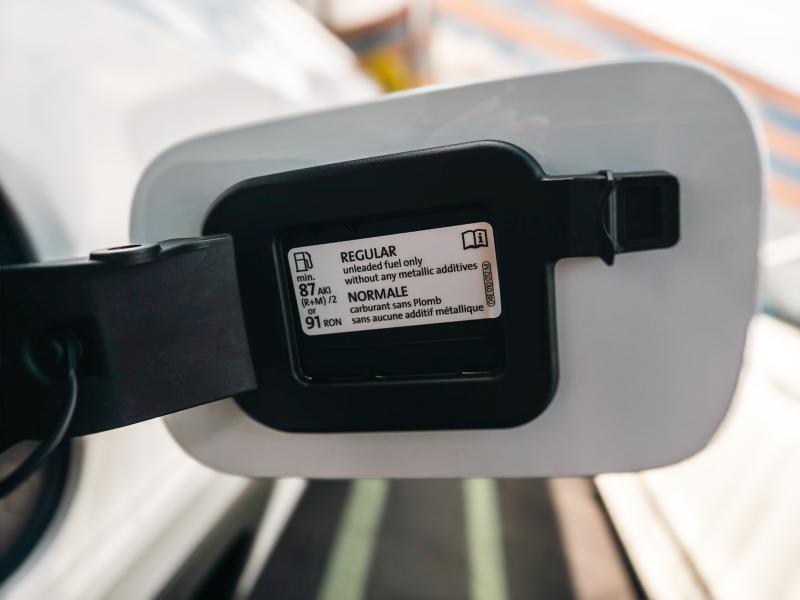
The best answer starts with your specific model. Inside your vehicle’s fuel filler flap, there is a fuel information label that identifies the correct fuel type and the minimum octane rating required for your vehicle.
But what does that mean?
Are the numbers at the pump important? Can you use something different than what the label says? Does it really matter if you use regular instead of premium? And what’s so “premium” about premium fuel anyway?
Hopefully these questions don’t keep you up at night…but we’ll do our best to explain.
Let’s start at the beginning.
Gasoline begins as crude oil, a naturally occurring resource that is refined and blended into different fuel products. Gasoline, however, is not refined into one universal formula. By the time it reaches the pump, it has been processed to meet different regulatory, emissions, seasonal, and engine-design needs.
Those needs can vary by country or region, which means gasoline standards are not exactly the same everywhere. Fuel may also be blended differently by season to help support proper starting, drivability, fuel evaporation, and emissions performance in colder or warmer temperatures. By the time drivers see the choices at the pump, those differences are typically reflected in the labels, grade names, and octane numbers used to identify each fuel type.
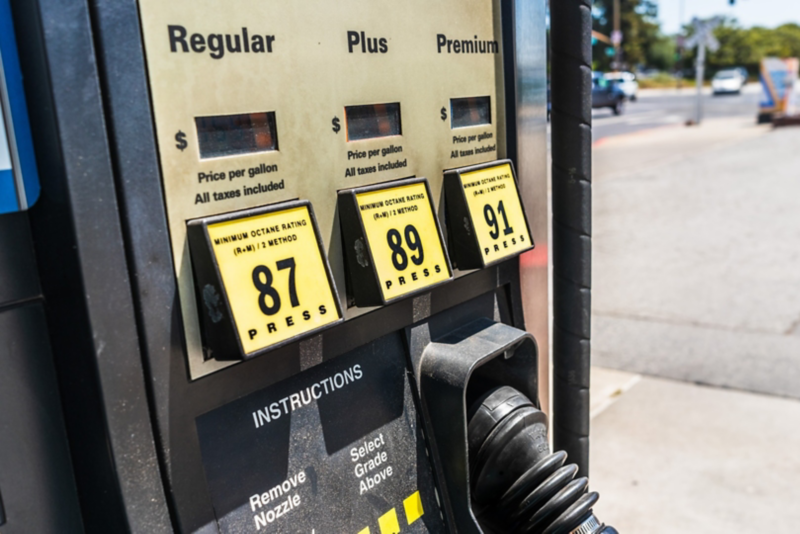
In the United States, gasoline sold for passenger vehicles is unleaded. Regular, Midgrade, and Premium are common fuel grades, and each is identified by an octane rating. In the U.S., that rating is shown as AKI, or Anti-Knock Index—the large number drivers see on gasoline pump labels. The octane level of fuel is rated using two different methods called research octane rating and motor octane rating. Each of these methods gives an octane number, respectively called the RON and MON. The average of these two numbers is the AKI. However, many countries outside of the United States use RON for octane ratings instead of AKI, which is why you may also see the minimum RON listed on your vehicle’s fuel label.
The “anti-knock” part of AKI refers to a fuel’s ability to resist engine knock. In normal operation, the spark plug ignites the air-fuel mixture inside the engine at a precise time, creating a controlled burn. Engine knock can happen when some of that mixture ignites too early or too suddenly because of heat and pressure inside the combustion chamber. This can create a pinging or knocking sound and may affect smooth engine operation. A higher octane rating indicates that the fuel is more resistant to that kind of premature combustion.
Think of octane as stability under pressure. That stability can be especially helpful in engines designed with higher compression, turbocharging, or other performance-focused engineering.
So how do I translate what's available at the pump to what my Volkswagen requires?
Volkswagen classifies fuel grades a little differently than what you may see at the pump. For Volkswagen vehicles, Regular refers to AKI 87–90, and Premium refers to AKI 91–93. Retail gasoline companies might also have different names for different grades – such as regular unleaded, plus, or super premium. So, you should always refer to the AKI number when deciding what fuel grade to put in your vehicle.
Why some engines benefit from Premium fuel
Most engines today are designed to balance power, responsiveness, efficiency, and everyday drivability. In engines designed to take advantage of higher-octane fuel, Premium gasoline can help support the performance feel the vehicle was engineered to provide, especially during more demanding conditions such as quick acceleration, hot weather, or carrying heavier loads.
That does not mean Premium fuel is automatically better for every vehicle. Using fuel with an octane rating higher than the minimum listed on your vehicle’s fuel information label will not improve fuel economy or increase engine power. However, for some vehicles, Premium fuel may help the engine achieve its specified power and torque output.
Although the fuel information label in your vehicle lists the minimum octane rating requirement, it's also important to check the “gasoline” or “fuel” section of your vehicle’s owner’s manual to see if Premium fuel is recommended.
So, should I use Premium fuel?
A simple way to think about it:
- Use fuel that meets at least the minimum octane rating on your vehicle’s fuel information label.
- Check your owner’s manual to see if Premium fuel may help your vehicle achieve its specified engine performance.
Can fuel affect how your vehicle drives?
Sometimes, but it is only one part of the picture. Using the correct fuel type and octane rating helps support proper vehicle performance. However, higher-quality fuels contain detergent additives designed to help limit deposit buildup in key engine and fuel system components.
If lower-quality fuel is used regularly, deposits may build up on components such as fuel injectors, intake valves, spark plugs, or combustion chambers. Over time, that buildup may contribute to concerns such as hard starting, hesitation, rough idle, stalling, reduced fuel economy, increased emissions, or a loss of smooth drivability. If your vehicle develops new, persistent, or unusual hesitation, roughness, or a jerky feel, an authorized Volkswagen dealer can help diagnose the cause.
Balancing performance and cost
Cost is an important part of the decision at the pump. Premium fuel typically costs more than Regular, so it is understandable for drivers to ask whether the added cost is worth it. The simplest guidance is to follow the recommendation for your specific Volkswagen and use fuel that meets or exceeds the minimum octane rating shown on the fuel information label.

The bottom line
When you're at the pump, you've got options. The key is knowing which ones make sense for your Volkswagen.


